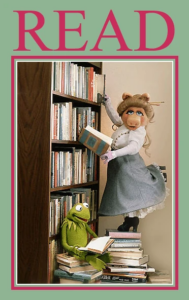
 I’m a child of the 80s. Back then, posters like the one shown here hung on walls in schools and libraries across the country. In Delwood Elementary in Delmar, Iowa (population 541), I remember seeing those bold READ letters, but I can’t recall whose eyeballs I stared into every time I entered the library. (I thought it was Nancy Regan, yet a quick Google search turns up no poster image so my wiring may be getting crossed with her Just Say No campaign.)
The first READ poster was produced, without much expectation, by the American Library Association in 1980 to promote National Library Week. (You can read the origin story here.) It featured Mickey Mouse reading to Pluto by the fire. Ironic, given the fact the poster campaign was about to ignite like a match on gasoline when the campaign shifted to use human celebrities. You can browse some of the famous faces lending their star power on this Reddit list, which includes both new and old posters. (Some hold up over time better than others–which is an unavoidable side effect of working with fallible humans.) To my surprise, I discovered the posters are still being produced!
Why are am I blasting you 45 years into the past? Because sometimes the answers to our current struggles are written in big, bold letters on posters stored in musty basements – we just have to go rummaging to find them.
I know you are working hard every day to help your students improve their reading. You are applying all of the tools you learned in your Science of Reading training – phonics, vocabulary, graphic organizers. . . I know the list goes on.
You are doing an excellent job.
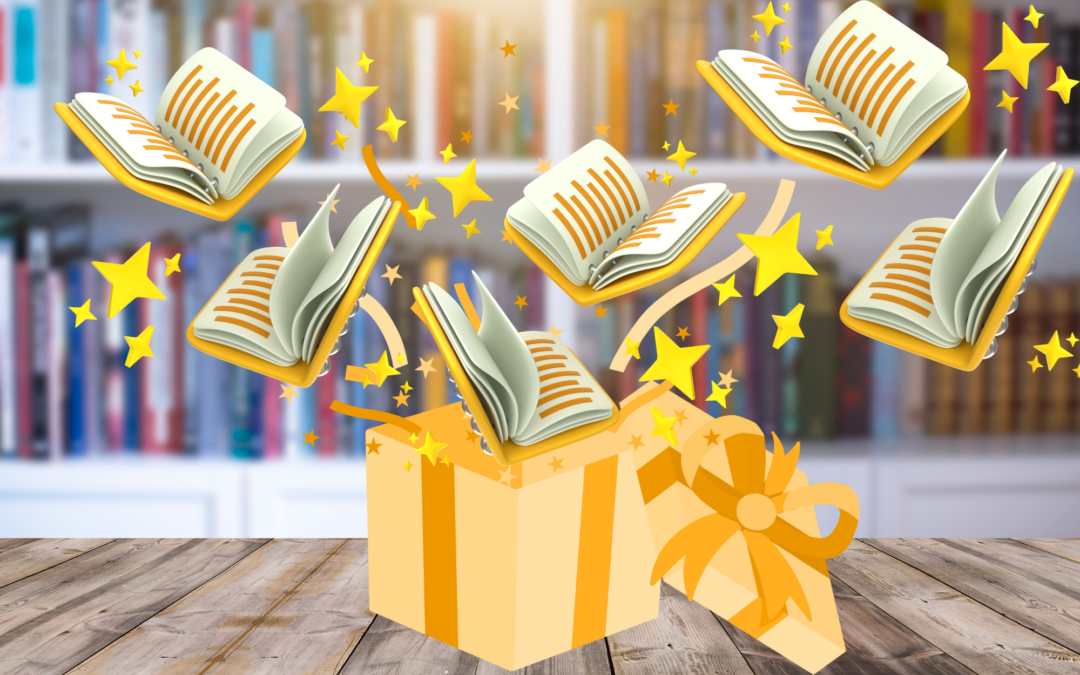
So, to begin 2026, I want you to give yourself a gift. It’s a gift for yourself, and a gift for your students. It’s a gift that is bursting with benefits and that multiplies over time and beyond your classroom.
The gift isn’t a thing, it is a verb – an action.
I want you to read aloud to your students every day.
A picture book like Wombats are Pretty Weird by Abi Cushman read with silly voices, a chapter from Mountain of Fire by Rebecca E.F. Barrone, a collection of animal poems like Animals in Surprising Shades by Susan Johnston Taylor. Just choose and do.
Why?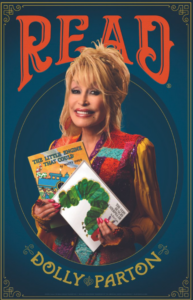
#1 – Because it is fun and relaxing. And boy, if there is something we all need a little more of, it is time to de-stress. Lower your lights, gather your students on a rug, and throw them a snack once in awhile. It can be a time to recharge for everyone.
#2 – It’s free. All you need is a book.
#3 – It’s easy. While I do suggest pre-reading the book first, there is very little prep involved if you aren’t engaging students in a specific lesson. (Which you don’t always need to do.) Just pick up a book and read to them!
#4 – This really should be #1 but I put it last because we tend to remember the last item in a list. Reading aloud improves reading comprehension. It is a research-based strategy that you can justify to administrators. I argue, if you aren’t reading aloud, you aren’t doing everything you can to improve your students’ reading comprehension.
Reading aloud is essential.
Reading aloud is effective.
I’m declaring 2026 the year of the read aloud – the STEM read aloud to be more specific. On StarrMatica’s blog and our socials (icons at the bottom of this page), I’m going to share ideas and resources that help you read aloud every day, especially in support of science. I’ll give you the latest read aloud recommendations, implementation ideas, and research round-ups to help you stay in the know and quickly apply new ideas to your teaching.
If you’re a planner like me, here’s a little roadmap for what I’ll share this year to help you to strengthen your science and reading instruction in less time and with more joy: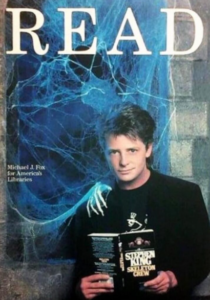
January – Let’s All Read Aloud – Nonfiction Gets a Make Over
I’m going to share read aloud research, how to make more time for reading aloud, how to encourage reading aloud beyond your classroom walls, and why nonfiction should be read in your classroom daily. In fact, we’re going to do a little re-introduction to nonfiction because the genre has undergone a renaissance in the last decade that will blow your mind – like the big reveal at the end of a make-over show!
February – Reading + Science – BFFs!
I’ll show you how to support and personalize your science instruction with picture books and share a caution about core knowledge curriculums.
March – Want to Improve Reading Comprehension? Teach Science.
Now that we’ve had a Science of Reading revolution, we need a Science of Science awakening. We’re going to explore how reading and science are inextricably linked and learn cross-curricular strategies that support both subjects.
April & May – Think Like a Scientist – The Crosscutting Concepts
We’ll examine each of the crosscutting concepts and learn how to help students use these frameworks for curiosity throughout the day.
June – August – A Summer of Science Notebooks
Over the summer, I’ll share picture books, activities, videos, and lessons for teaching with science notebooks – resources galore! – so you can return in the fall with a plan for implementing this research-based practice.
September – December – Science is a Verb – The S&EPs
We’ll talk about why the science and engineering practices replaced the scientific method and how you can model and encourage each of the practices in your classroom.
I’ll be sharing resources in different places, and I don’t want you to miss out. So please take a moment to:
- Type your email and click “Subscribe” at the top of this page to receive an email notifying you of each new blog post.
- Like StarrMatica’s Facebook and/or Instagram
- Sign up for my monthly newsletter by entering your information in the form at the bottom of this page.
Those are the places I post most frequently. You can also find me here:
Happy Reading!